Inspired by “nanodiamonds” found on ice giants like Uranus and Neptune, this new research could help to greatly reduce plastic pollution and transform plastics in the ocean.
Science Photo Library / Getty ImagesA computer exemplification of nanodiamonds . littler than a micrometer , they have a in high spirits potential for medicine , electronics , and other industries .
scientist at Helmholtz - Zentrum Dresden - Rossendorf in Germany of late blast cheap plastic with ultrapowerful optical maser , and in the cognitive operation create improbably tiny “ nanodiamonds ” and confirmed the universe of a raw , exotic character of body of water .
Using a high - powered ocular laser , the physicists blasted a sheet of polythene terephthalate ( PET ) charge plate — the variety used in water and soda bottle — and heated the charge plate to around 10,000 degrees Fahrenheit for an incredibly brief amount of time , only billionth of a second , Live Sciencereported
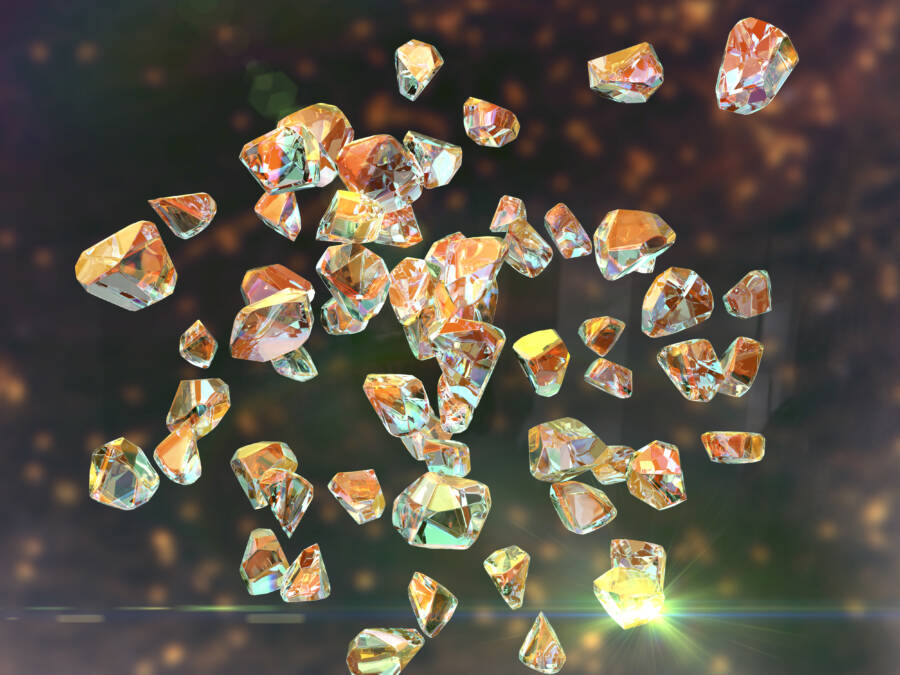
Science Photo Library/Getty ImagesA computer illustration of nanodiamonds. Smaller than a micrometer, they have a high potential for medicine, electronics, and other industries.
The result was that this uttermost heat make pressures millions of times stronger than Earth ’s atmosphere , ultra - compressing the charge plate and in effect demixing its molecular structure . Carbon atoms within the charge plate get to crystallize , leave way for hydrogen and atomic number 8 to drift out through the resulting lattice .
The shed light on carbon turned into nanodiamonds which measured billionth of a meter , while the hydrogen and oxygen turned into “ superionic water system , ” or “ superionic shabu , ” whichQuanta Magazinestated is a black , fabulously hot internal-combustion engine that may really be the most unwashed form of water in the universe .
According toNew Scientist , superionic water also conducts electricity more easily than standard piddle .
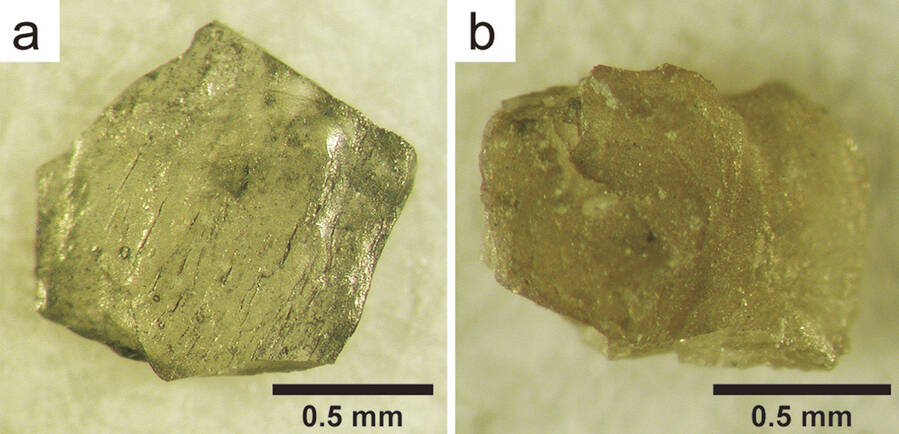
Hiroaki Ohfuji et al./Wikimedia CommonsNanodiamonds from the Popigai crater in Siberia.
So , what does this all intend ?
In pragmatic applications , nanodiamonds can be used to exchange C dioxide into other throttle and deliver drug into human bodies , explained the research study ’s conscientious objector - author , physicist Dominik Kraus .
And potentially , in the future , Kraus believes that nanodiamonds could also be utilized as “ ultrasmall and very accurate quantum sensor for temperature and magnetized subject field , which may result in a superfluity of coating . ”

Tobias Roetsch/Future Publishing via Getty ImagesCutaway illustration of Neptune detailing the core and mantle.
Hiroaki Ohfuji et al./Wikimedia CommonsNanodiamonds from the Popigai crater in Siberia .
But perhaps most relevant to the median person is the fact that this technique could help thin plastic pollution by providing a fiscal inducement to unclutter plastics from the ocean and transubstantiate them into nanodiamonds .
Another researcher on the labor , Siegfried Glenzer , from the SLAC National Accelerator Laboratory in California , explained that scientist have previously been able-bodied to create nanodiamonds in science laboratory preferences , but “ the conditions were so extreme and dynamical that the diamonds ended up fall aside . ”
This novel tryout created the diamonds at a much scummy pressure , and , Glenzer said , might in reality offer physicists a chance to harvest the diamonds .
The experiment also extend physicist further agreement of the nature of world ice giants like Neptune and Uranus , whose unusual weather have frequently pose researchers .
Neptune , despite being an internal-combustion engine giant , has always been by chance hot , and Uranus ’ charismatic field forms in a unknown shape .
Like PET plastic , the inside of ice giants contain O , carbon , and hydrogen , but their inner pressure were never believed to be intense enough to result in nanodiamond formation .
This unexampled experiment prove , however , that nanodiamonds could very probable form at the magnetic core of ice giants , where the heat would cause a similar reaction as the lasers did to PET plastic , causing “ diamond rainwater ” that would move through the DoI of the planet .
“ What this mean , ” Glenzer read , “ is that diamonds are probably everywhere . If it happens at lower pressures than we ’ve antecedently seen , it have in mind they ’re inside Uranus , inside Neptune , inside some moons such as Titan . ”
Tobias Roetsch / Future Publishing via Getty ImagesCutaway instance of Neptune detailing the core and Mickey Mantle .
diamond traveling throughout the interior of Neptune could be create rubbing that would excuse the major planet ’s high temperature , and the formation of superionic pee on Uranus may be conducting current that give its magnetised field its strange embodiment .
While these theories have yet to be proven , the new cogitation provides good evidence that nanodiamonds and superionic water are actually forming naturally on Neptune and Uranus .
It ’s possible , Kraus said , that this theory can be affirm within the next 10 years or so , when he expects a NASA space probe to be launched to Uranus .
In any case , though , the ability to wrench cheap plastic into useful material like nanodiamonds and superionic water could have dozens of practical applications here on Earth , and that ’s something to be very excited about .
After reading about this new find , read about thelake of water scientist discovered on Mars . Then , view the exposure of asupermassive black holedestroying a genius .
